RNPM check: pledges, leasing, movable mortgages
Check before buying whether the car is pledged to a bank, still under leasing, or used as loan collateral. The report arrives by email.
Availability details →Order
This service launches soon at 69 RON. Meanwhile you can order any other document on the site.
See all documents →What is it?
Romania's National Registry of Movable Publicity (RNPM) is the official record of security interests on movable assets: cars pledged to banks, ongoing leasing contracts, movable mortgages, guarantees. What is registered there follows the asset, not the owner: buy a pledged car and the pledge comes with it.
The RNPM check is the step most used-car buyers skip, although it is the only one that shows the debts attached to the asset. Our report shows whether there are active registrations on the VIN, CNP or tax ID you check.
A registration in the RNPM is a public notice: a creditor writes down that a specific asset answers for a specific debt. From that moment the claim is visible to anyone who looks, and nobody can later claim they did not know. That is the point of the register, and it is also why the check is cheap protection. The information is already published; it only has to be looked up against the right identifier.
You search by identifier, not by name. For a car that means the VIN, the 17 characters on the registration papers and the windscreen. For a person it is the CNP, and for a company the tax identification number. Searching by somebody's name is not reliable, because names repeat and registrations are filed against the identifier.
Leasing is the case that catches buyers out most often. While a leasing contract runs, the car belongs to the leasing company and the driver is only using it. Someone can hand you the keys, the papers and a signed contract for a car they do not yet own. The register shows the contract. The seller's confidence does not.
A bank pledge works differently and ends in the same place. A loan secured on the car leaves a registration behind, and that registration stays until the creditor removes it. Paying off the loan is not the same as clearing the record: removals are filed by the creditor, and they are sometimes forgotten for months. A live registration is your problem at the moment of purchase, whether or not the debt was actually settled.
If the check comes back with an active registration, the answer is not to walk away automatically. Ask the seller for written confirmation from the creditor that the debt is settled and for the removal to be filed, then run the check again before you pay. The order matters. Buyers who pay first and ask afterwards end up negotiating with a bank they never chose.
The register does not cover everything. It records security interests that a creditor took the trouble to file, so an informal debt between two people leaves no trace. It says nothing about mileage, damage history or mechanical condition, and it is not the land registry: land and buildings sit in a separate system. A clean result means nothing is registered against that identifier, which is a strong signal rather than a guarantee about the person.
In practice the two checks answer different questions about the same car. The RAR history tells you what the car has been through. The RNPM tells you what is attached to it. A car can have a spotless technical history and still be pledged to a bank, and the buyer who ran only the first check finds out much later, when the money is already gone.
The right moment is before the deposit. A check run the day before signing is too late to be useful, because by then the deposit is paid and walking away costs money. Run it while you are still deciding, alongside the history report, and the result becomes part of the negotiation instead of an emergency.
There is a use for the check that has nothing to do with buying. Sellers run it against their own VIN or tax number before listing an asset, to confirm that an old registration was actually removed. Finding a forgotten entry three days before a sale is unpleasant. Finding it a month earlier is just paperwork.
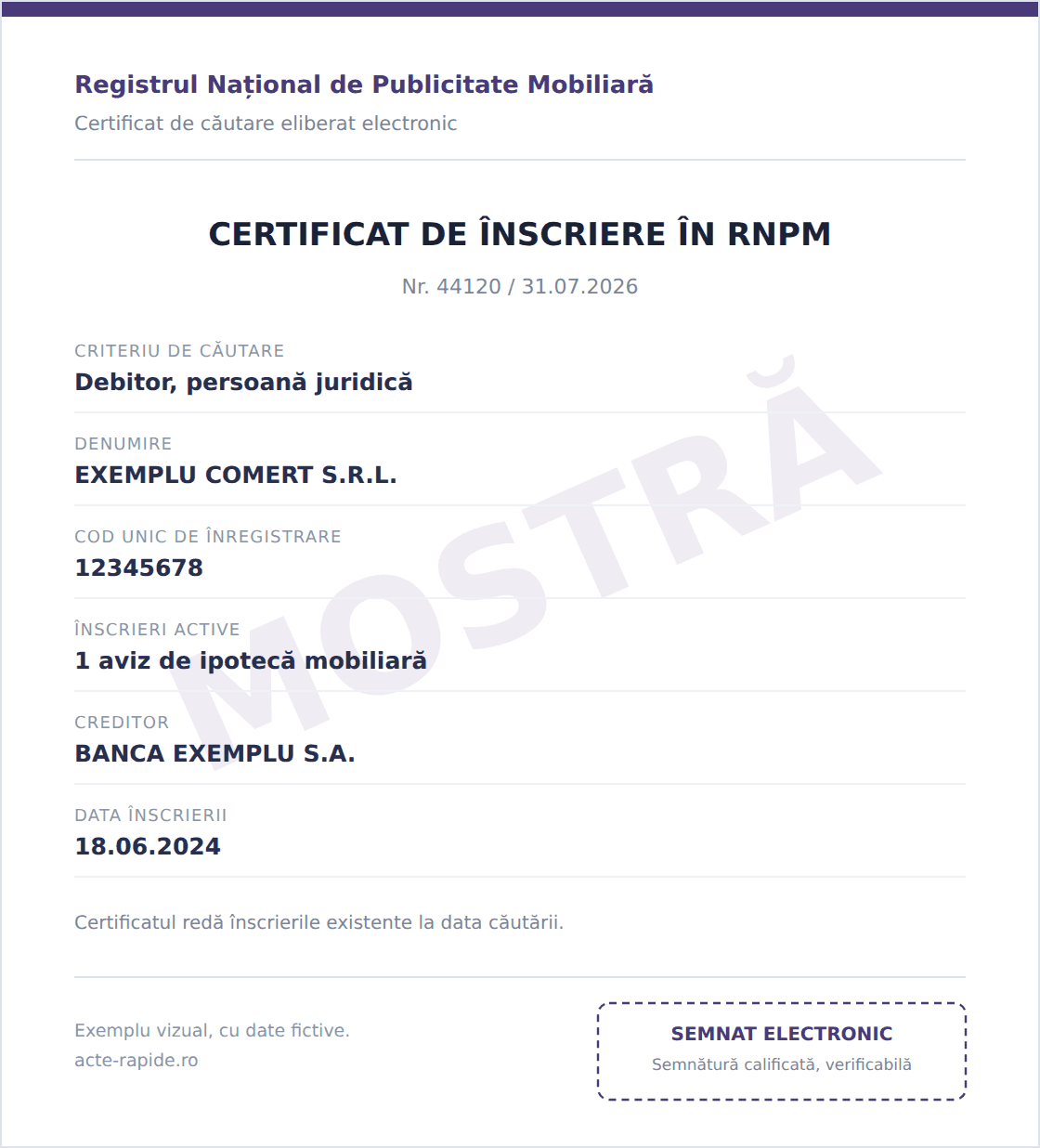
The result states whether there are active registrations against the identifier you checked, who the creditor is and what kind of security it is, whether a pledge, a running leasing contract or a movable mortgage. If nothing is registered, the report says so explicitly, which leaves you with a dated record that you checked before handing over money.
When you need it
- Checking a used car before purchase (pledges, leasing)
- Checking a business partner's registered guarantees
- Before lending money against an asset
- Checking your own record before selling
What the document contains
- Active RNPM registrations for the checked identifier
- The creditors and the type of security (pledge, leasing, movable mortgage)
- A plain-language conclusion: free of encumbrances or not
How it works
Three simple steps, from your phone or laptop.
Chassis number (VIN), CNP or company tax ID + your contact details. Under 2 minutes.
Bank card, Apple Pay or Google Pay. The invoice arrives automatically by email.
It arrives by email in ~60 minutes. We also notify you by SMS.
Frequently asked questions
About this document
Does it complement the RAR history?
Yes. The RAR history shows mileage and damage, and the RNPM shows the debts attached to the car. Many clients order both.
What do I need to order?
The car's VIN (17 characters, on the registration papers or windscreen) or, for persons and companies, the CNP or tax ID.
How long does it take?
Usually under an hour during the day; overnight orders are delivered in the morning. (Online ordering is temporarily paused; the timeline applies once the service relaunches.)
This service is launching soon
Online ordering is being reworked. Meanwhile, see the documents available today.
See all documents →