39 RON (about €8), by email in ~60 seconds, electronically signed
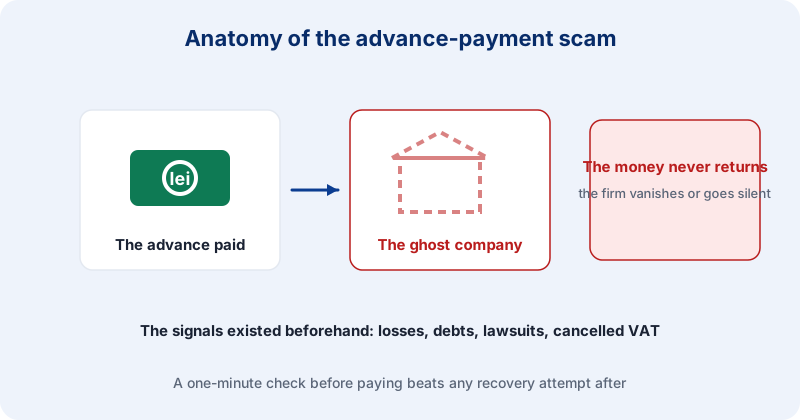
The pattern is the same every time. A Romanian supplier with a clean website, a tax ID you can actually look up, a contract that reads like a lawyer wrote it. The price sits 15-20% below what everyone else quoted, low enough to please you, not low enough to alarm you. They ask for an advance, usually 30-50%, with a reasonable story: materials, reserving production capacity, a deposit to their own supplier. You wire it. Two weeks of increasingly creative excuses follow, then the emails slow down, then they stop. Foreign buyers are the favourite target, for a simple reason: you are a thousand kilometres away, you don't speak Romanian, and the scammer assumes you have no way to check. That assumption is wrong, and the records that expose the scheme were public before you paid.
Why the polished website proves nothing
A decent company website costs a few hundred euros and a weekend. Reviews can be manufactured, team photos come from stock libraries, and the phone number changes with a new SIM card. Everything you can see about the company online was put there by the company. Checking a supplier on their own website is not due diligence, it is reading the brochure they wrote about themselves.
What no Romanian company can hide
There is one trail no company in Romania can cosmetically fix: the state's records. The fiscal status held by ANAF, the tax authority. The annual financial statements filed with the Ministry of Finance, public for every company, every year. The court cases, searchable by company name on the national courts portal, which is a level of transparency most EU countries don't offer. A company can lie in its marketing, but lying in its financial statements is a criminal offence, and no one can make an insolvency case disappear from the court records.
The signs that almost always precede the scam
Companies that take advances and vanish are rarely healthy businesses that turned rogue overnight. They are usually companies that had been sinking for a while, with client advances as the life raft. The sinking shows in the records: losses year after year, negative equity, growing debts, a VAT code cancelled by the tax authority for fiscal risk, court cases where the company appears as defendant, sued by earlier clients or unpaid suppliers. Sometimes the sign is simpler still: the company you are emailing is not the company in the contract, because scammers borrow the tax ID of a real, unsuspecting business. A proper check catches that too, because the name, address and status in the records don't match the story you were told.
The 60-second test
You could do all these checks manually and for free, across four separate Romanian state websites, if you read the language and have an hour. Or you can let a system do them at once: on acte-rapide.ro you enter the company's tax ID, pay 39 RON, about 8 euros, and in roughly a minute a PDF report lands in your inbox with a colour-coded verdict, green, yellow or red, a 0-100 trust score, and every signal explained in plain language: what the tax authority says, what the last five annual statements show, which court cases the company appears in and on which side.
Run the cold arithmetic. Advances lost in these scams start at four figures and go up quickly. The check costs about eight euros. There is no cheaper insurance anywhere in the deal, and if the company turns out clean, those few euros bought you something equally useful: the confidence to sign without a knot in your stomach.
What to do if the verdict comes back bad
Yellow means questions: raise the report's findings with the supplier, and an honest partner will answer them without getting defensive. Red means you wire nothing in advance, no matter how convincing the person on the phone sounds; if you still want the deal, propose payment on delivery and watch how the tone changes. That proposal is a test in itself. A supplier who intends to deliver accepts it, a supplier who intended to vanish suddenly discovers reasons why it cannot work.
Fill in a form, pay online and receive the electronically signed document by email.
Check the company before wiring the advance (39 RON, about 8 euros, ~60 seconds) →