89 RON (about €17), by email in ~10 minutes, electronically signed
Registering a car in Romania is not difficult, but it is unforgiving about completeness. One missing paper in the folder means a wasted morning and a new appointment, sometimes two weeks later. The process below is in the order it has to happen, because the order is most of the difficulty.
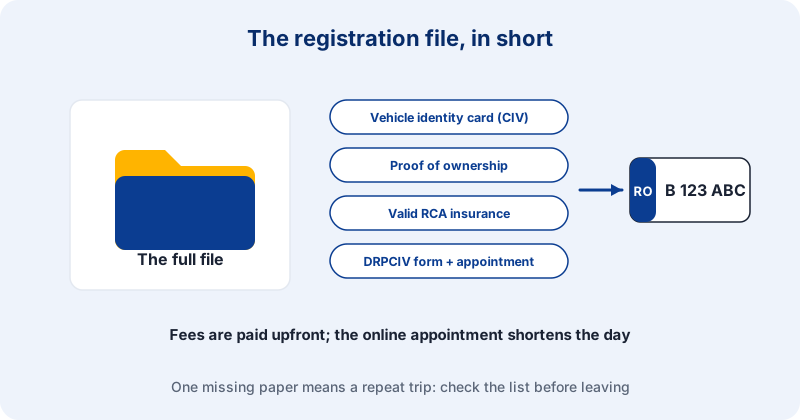
Step zero, before you pay for the car
Everything below applies to a car you already own, with whatever history it carries. Checking the mileage, the reported damage and the legal status belongs before the payment, not after. If you have not done that yet, read the mileage guide and the pledge check first. If you are already the owner, carry on.
Step one: register the car for local tax
Before DRPCIV, the car has to be declared at the local tax office of the town where you live, within 30 days of acquiring it. Many councils accept this online through Ghiseul.ro or their own platform. You receive proof of tax registration, and without it the registration file is incomplete. The seller separately removes the car from their own tax record, so remind them, because their unpaid tax will eventually become your problem to chase.
Step two: book the DRPCIV appointment
Appointments are booked online on the DRPCIV platform and cost nothing. Choose the right service: transcriere for a car bought inside Romania, inmatriculare for one brought in from abroad. In the larger cities slots go days ahead, so book as soon as you have the ownership documents rather than when the file is complete.
Step three: the file itself
- The registration application form, completed.
- The vehicle identity card (cartea de identitate a vehiculului), original.
- The ownership document: sale contract, invoice, or a completed leasing contract.
- Your identity document. For companies, the registration certificate and a signed authorisation for the person filing.
- The proof of local tax registration from step one.
- A valid RCA insurance policy in the new owner's name.
- Proof of a valid technical inspection, for anything that is not a new car.
- Proof of payment for the registration certificate and, where new plates are needed, for the plates.
- The old registration certificate, for a transcription.
What it costs
The registration certificate and the plates together normally come to under a hundred lei, payable online or at the counter. Personalised plates are charged separately. The old first-registration tax has not existed for years, whatever you may still hear at a car market.
Cars brought in from abroad
For an imported car there is one more stop before DRPCIV: the Romanian Auto Register, which carries out the individual approval and issues the Romanian vehicle identity card. This is also the moment of truth for an import with an unknown past, because the approval will surface what the seller did not mention. An international VIN report done before all of these trips saves you from approving a car you would not have bought. The file also needs the origin documents from the country of purchase and, for vehicles from outside the European Union, proof that customs duties were paid.
How long it takes
With a complete file and an appointment, filing takes under an hour, the plates are normally handed over the same day, and the registration certificate arrives by post within one or two weeks. Until it does, you drive with the proof issued at the counter. The whole trick is banal: get the folder right the first time.
What registration does and what it does not do
Registration puts the car in your name in the national record and lets you drive it legally. That is all it does. It does not clean the car's past: a rolled back odometer, a structural repair after an accident abroad or a claim someone else has over the vehicle stay exactly where they were, except now they are yours. The clerk at the counter checks that the folder is complete, not that the purchase was sensible.
The thirty day window, counted properly
The thirty days for the local tax declaration run from the date on the ownership document, not from the day you first drive the car or the day the seller finally answers the phone. Filing late is not a catastrophe, but the tax is still owed from the date of acquisition and the council can add a penalty on top. The same declaration stops the clock for the seller, which is why they have an interest in doing their half quickly.
What happens to the plates
On a purchase inside Romania the plates can usually stay on the car if the new owner is registered in the same county and the old registration certificate is in the folder. That is the cheaper route, and it is the reason the old certificate is on the list above. If the car moves to another county, or you simply want new numbers, you pay for the plates and hand the old set in. A car brought in from abroad always gets Romanian plates issued.
The mistakes that send people home
Four of them account for most of the wasted appointments. The RCA policy is still in the seller's name, because the buyer assumed insurance travels with the car; it does not. The technical inspection expired somewhere between the handshake and the appointment, and nobody looked at the date. The name on the sale contract does not match the identity document, one letter off or a maiden name, and the file is rejected as a matter of routine. And the vehicle identity card in the folder is a photocopy, because the seller kept the original for reasons that are rarely innocent. Add a fifth for companies: the person filing turns up without a written authorisation from the firm.
Buying from a company, or finishing a leasing contract
If the seller is a company, the ownership document is an invoice, and it needs to be a paid one. If the car was on a leasing contract, the file needs proof that the contract is closed and that ownership has actually passed to you, not just a statement that the final instalment went out. Leasing companies issue this document, sometimes slowly, and the transfer cannot be filed without it. Ask for it the week you make the last payment.
If you are not a Romanian citizen
The car is registered where the owner lives, so a foreign owner needs a Romanian residence document alongside the identity document, and a company needs its Romanian registration papers. Documents issued abroad, including the sale contract and the foreign registration certificate, are normally required with an authorised translation. Arranging that before the appointment costs a day; discovering it at the counter costs you the next free slot.
The order, in one paragraph
Buy with the checks already done. Declare the car at the local tax office and collect the proof. Book the DRPCIV appointment. Buy the RCA policy in your own name and confirm the technical inspection is still valid. Pay for the certificate, and for the plates if you need them. Turn up with originals. For an imported car, put the Romanian Auto Register before all of this.
Fill in a form, pay online and receive the electronically signed document by email.
Check the car's history before the paperwork (89 RON, ~10 minutes) →